If you read one strategy book, read Good Strategy Bad Strategy by Richard Rumelt, because it is the only one here that spends most of its pages on how strategy goes wrong, and the most common way is mistaking a list of goals for a strategy. Four of the eight below are about making the choice, and four are classics written for companies far bigger than yours. Each comes with who should read it, who should skip it, and what it gets wrong.
How we picked these eight
We judged all eight on four criteria: the book has to force a choice rather than raise ambition, start at the obstacle rather than the goal, survive being applied by a company of about twelve people, and be honest about the limits of its own evidence. The last one matters more in strategy than in any other business writing, because this shelf is full of case studies assembled after the fact.
It forces a choice, not a wish list
A strategy book earns its place if it makes you name something you will stop doing. Books that only raise ambition produce longer goal lists, which is the problem most companies already have.
It starts at the obstacle, not the ambition
Strategy is a response to a specific difficulty. Every book here begins by asking what is actually in the way, and the two that skip that step are the two we recommend with a warning attached.
It survives a company of twelve
Most of this canon was written for corporations with a planning function. Each book below is judged on what is left when the strategy team is three people who also do the work.
It shows its evidence and its limits
Several famous strategy books are collections of cases picked after the companies had already won. That tells you what winners had in common, not what those moves do to everybody who tries them.
Four books about making the choice
These four are about the act of choosing: what to pursue, where, and what to give up in exchange. Read in the order below they build on each other, from what strategy is, through a framework for deciding, to why a decision holds once competitors can see it.
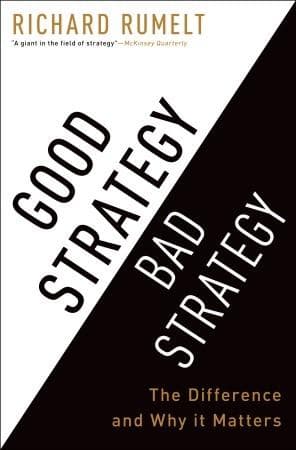
Richard Rumelt · 2011 · the one to read first
Good Strategy Bad Strategy is the one to read first, and the reason is unusual: it spends more pages on what bad strategy looks like than on what good strategy is. Rumelt reduces the good kind to three parts he calls the kernel, a diagnosis of what is actually in the way, a guiding policy for dealing with it, and a coherent set of actions that do not contradict each other. Then he names the four ways the bad kind shows up: fluff, failure to face the difficulty, mistaking goals for strategy, and objectives that are just wishes with numbers on them.
Read it if the document you call a strategy is really a list of targets, which is the third failure on his list and by far the most common. Skip it if you want a canvas to fill in: it hands you judgment, and judgment does not come with a template.
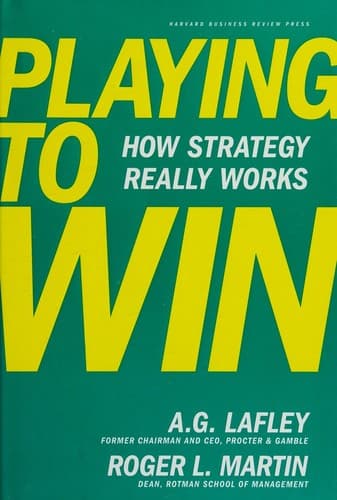
A.G. Lafley and Roger Martin · 2013 · the most usable framework
Playing to Win has the most usable framework here and the least usable examples, and both halves of that sentence matter. The framework is five choices that have to hang together: what is our winning aspiration, where will we play, how will we win there, what capabilities must be in place, and what management systems will keep it honest. Written by the chief executive who ran Procter and Gamble and the business school dean who advised him, so the cases are Olay, Bounty and Gillette, at a scale nobody reading this operates at.
Read it if you want a shape for a conversation you can actually hold in an afternoon: the five questions transfer to a team of twelve almost unchanged. Skip the case studies, or at least do not try to reason from them, because a brand relaunch at a consumer goods giant has nothing in common with your next two quarters.
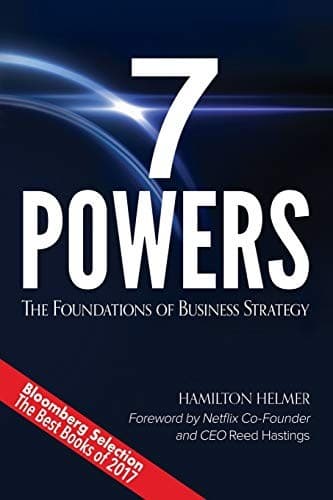
Hamilton Helmer · 2016 · why an advantage lasts
7 Powers answers the question the other books mostly skip: why does an advantage survive being noticed? Helmer argues there are exactly seven durable ones, scale economies, network economies, counter positioning, switching costs, branding, a cornered resource and process power, and each has to do two things at once, improve your economics and remain out of reach for a competitor who can see precisely what you are doing. It is short, closely argued, and the most intellectually honest book on this list.
Read it if you can explain what you do better but not why nobody has copied it yet. Skip it if you have no product in the market: the seven are positions you can hold, and holding one is not something you can plan your way into from a standing start.
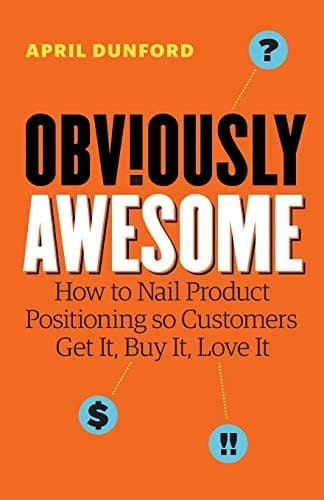
April Dunford · 2019 · the one you can act on this month
Obviously Awesome is the smallest book here and the only one a ten person company can act on inside a month. It is about positioning, which is the part of strategy that decides who you are for and what you are an alternative to, and Dunford treats it as a repeatable exercise rather than a talent: list the alternatives customers actually compare you to, isolate what only you have, work out who cares intensely, and only then pick the market category you want to be judged in. That last step is the one that changes decisions, because a category comes with expectations you then either meet or deliberately break.
Read it if you cannot say in one sentence who your product is not for. Skip it if you came for the long view: this is deliberately about the choice you can make this quarter, not about where the company is going in five years.
Four classics written for a company far bigger than yours
These four are the canon, and every one of them was written with thousands of employees in mind. That is not a reason to skip them: three of the four contain an idea a small company can use directly, as long as you know which part to leave in the book. Below each one we say which part that is.
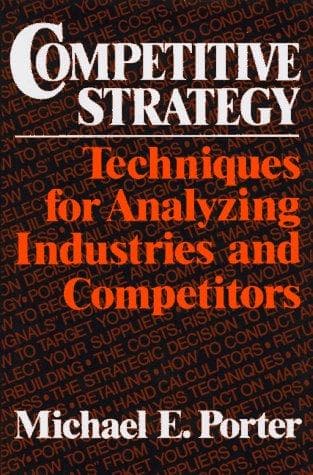
Michael Porter · 1980 · the source everyone quotes
Competitive Strategy is the source of almost everything else on this list and the book most often quoted by people who have not read it. Its five forces, rivalry among existing competitors, the threat of new entrants, the threat of substitutes, and the bargaining power of buyers and of suppliers, explain something small companies feel and rarely name: why a good team in a badly structured industry works twice as hard for half the margin. It was written in 1980 for corporate planners and reads exactly like that.
Read it if you want the original rather than the summary of the summary. Skip it in favor of Joan Magretta’s Understanding Michael Porter, from 2011, if you want the same ideas at a fifth of the length, which is the honest recommendation for most readers of this page.
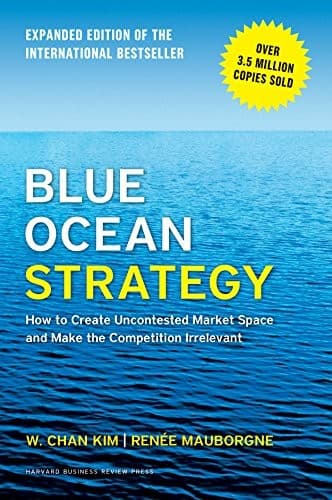
W. Chan Kim and Renée Mauborgne · 2005, expanded 2015 · one good tool
Blue Ocean Strategy is the most quoted book here and the one with the weakest evidence, and it is still worth an hour for a single tool. The argument is to stop competing on the dimensions your industry has agreed to compete on and change the dimensions instead, and the tool that makes it concrete is four questions about your own offer: what can be eliminated, what can be reduced well below the standard, what raised well above it, and what created that the industry has never offered. The weakness is the case selection, which is retrospective: these are companies picked because the move worked.
Read it if your market feels like a price fight and you want a structured way out. Skip the case histories and run the four questions on your own offer with your own team, which is where the value of this book actually sits.
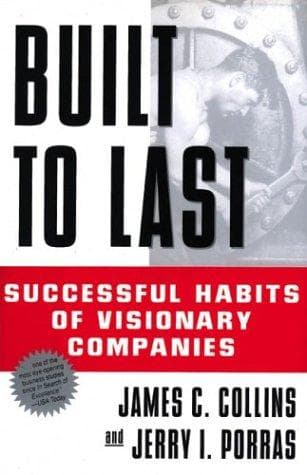
Jim Collins and Jerry Porras · 1994 · where the BHAG comes from
Built to Last is where the BHAG comes from, and that single idea is why a 1994 book about eighteen large corporations belongs on a strategy list for small companies. Collins and Porras coined the Big Hairy Audacious Goal here, a commitment big enough to be slightly frightening and concrete enough to know whether you hit it, and built it into an argument that durable companies organize around a purpose that outlives any one product. Worth knowing before you cite it: the BHAG is routinely attributed to Good to Great, the more famous 2001 book, and it is not from there.
Read it if you are writing the layer above your goals, the mission, the destination and the one dated number. Skip it if survivorship worries you, and it should a little: the eighteen companies were chosen because they had already endured, so the book reports what survivors shared rather than what caused them to survive, and Collins himself later wrote How the Mighty Fall about companies that stopped.
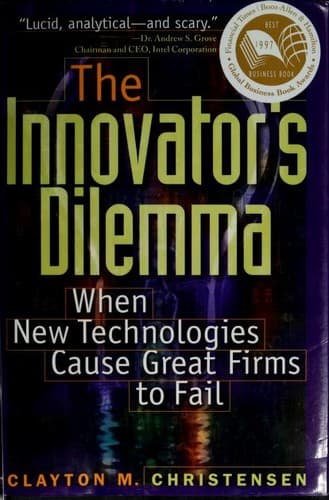
Clayton Christensen · 1997 · why doing everything right loses
The Innovator’s Dilemma is the best explanation of how a company can lose while doing everything its own playbook tells it to do, and the least actionable book on this list. Christensen’s case is that established firms are beaten not through incompetence but through diligence: they listen to their most profitable customers, who never ask for the cheaper and worse product that eventually takes the market from underneath. For a small company the lesson inverts, which is what makes it useful here rather than merely interesting.
Read it if you are choosing where to attack a larger competitor: you are usually the cheaper and worse product, and their entirely rational refusal to respond is your opening. Skip it if you want moves rather than a pattern, because it diagnoses a mechanism and stops there.
If you would rather be taught than read, this ground is lesson 3 of 17 in From Zero to Goals: The vision and the BHAG: where the mission points. Turn a mission into a destination with a date, and tell vision from strategy from goal before they blur. You make the calls inside one realistic company, run the exercise on your own goals, and the course ends with a 15 question exam (12 to pass) and a certificate worth putting on your profile.
Two more worth knowing
Two more are worth knowing, and both are companions to books above rather than replacements. The Crux by Richard Rumelt, from 2022, is the follow up to Good Strategy Bad Strategy and narrows to one question: of everything in your way, which obstacle is both important and actually addressable, because that is the only place effort compounds. It is less quotable than the first book and more useful once you accept the kernel. Understanding Michael Porter by Joan Magretta, from 2011, is the shortcut to Porter, written by a former editor of his work, and for most readers it is the better buy of the two.
One book we leave off deliberately is The Art of War. It appears on almost every strategy reading list, it is twenty five centuries old, and nothing in it will help three people decide which of two customer segments to stop serving this quarter. The same goes for the general run of books about disruption written after 2010: they describe the weather, and you need a decision.
Which one to read first
Which book to read first depends on what is blocking you, not on which book is best. Four situations cover almost everyone who lands on this page.
Your strategy is a list of goals: Rumelt, chapter on bad strategy
Start with the four failures rather than the kernel. Most readers recognize their own document inside ten pages, and that recognition does more work than any framework.
You need a shape for the conversation: Playing to Win
Five questions, one afternoon, three people. Write the answers down even when they are obviously wrong: a wrong answer on paper is arguable, and an unspoken one is not.
You cannot say why nobody copies you: 7 Powers
Reach for it when growth is fine but fragile. If none of the seven describes you, that is the finding, and it is better to know now than after a competitor arrives.
You cannot say who you are not for: Obviously Awesome
The fastest return of anything on this page. A positioning exercise takes a day and changes your homepage, your pricing page and half your sales conversations.
What none of these books will tell you
None of these books will tell you what to do on the Monday after you decide. All eight end where the choice is made, and the choice is the easier half: the hard half is that four people have to remember the decision in week nine, when a large customer asks for exactly the thing the strategy forbids. Not one of the eight describes where the strategy lives between planning sessions, who is allowed to overrule it, or how a person hired in month seven finds out what was decided in month one.
The second gap is the join between the strategy and the quarter. A company of twelve does not need a strategy document, it needs three sentences that are visible when the goals are written: what we do, who we do it for, and what we refuse. Then the quarter’s objectives have to be traceable to those three sentences, and any objective that is not traceable is either a new strategy nobody announced or work that should not be in this quarter. That test takes ten minutes and none of the eight books proposes it, because at Procter and Gamble or Intel there was a planning department whose whole job was to notice.
Reading eight books is one way to learn this. Deciding the three sentences and then running one quarter against them is faster, and it is what Celorly is built around: a strategy screen that holds the mission, the vision and one dated number, objectives underneath it that each point at something above them, and a close out at the end of the quarter that scores what happened. The course linked above walks a fictional twelve person agency through the same three sentences before any goal is written.
Where to go next
Where to go next depends on whether you would rather read more or start writing. If the layer above your goals is the missing piece, begin with mission vs vision for the floors and what each one is for, then mission statement examples and core values examples for the sentences themselves. If the choice is already made and the problem is delivery, goal setting for small teams covers the loop end to end and quarterly planning for small teams is the session where a strategy turns into three months of work. For the other half of this shelf, our eight best OKR books review the books about running the quarter rather than choosing it, and our eight best execution books cover the harder half of this page’s subject: what to do once the choice is made and the work still is not moving.
What is the best strategy book?+
Good Strategy Bad Strategy by Richard Rumelt, from 2011. It is the only widely read strategy book built around how strategy fails, and its central diagnosis, that most documents called strategy are lists of goals with no view on what is in the way, is the one that changes what readers do next. Playing to Win is the better book if what you want is a framework to run a session with.
What is the best strategy book for a small business?+
Obviously Awesome by April Dunford, because positioning is the piece of strategy a company of ten can decide and act on within a month, and because it is the only book on this list not written with a corporation in mind. Read Good Strategy Bad Strategy next for judgment about what a strategy is, then stop reading and write three sentences: what you do, who for, and what you refuse.
Is Blue Ocean Strategy still worth reading?+
Yes, for the four questions and not for the case studies. Asking what your offer could eliminate, reduce, raise and create is a genuinely good hour with a team, and it works at any size. Treat the examples with care: they were selected after the companies succeeded, so the book shows what worked for winners rather than what those moves do on average.
Do I need to read Michael Porter?+
You need the five forces, and you probably do not need the 1980 original to get them. Joan Magretta’s Understanding Michael Porter, from 2011, covers the ideas in a fifth of the pages and is the better buy for most readers. Read Competitive Strategy itself if you want the argument in the author’s own words and are prepared for a book written for corporate planners.
Which book is the BHAG from?+
Built to Last by Jim Collins and Jerry Porras, from 1994, which is where the Big Hairy Audacious Goal was named. It is commonly credited to Good to Great, the more famous 2001 book by Collins, and that is wrong. If you want the idea without the book, a BHAG is one commitment large enough to be slightly frightening and specific enough to check, with a date attached.
What is the difference between a strategy book and a goal setting book?+
A strategy book helps you decide what to pursue and what to give up. A goal setting book helps you deliver whatever you already decided, usually within a quarter. Confusing the two is why so many planning sessions produce a longer target list and no clearer direction: the goals are downstream, and no amount of rigor in writing them recovers a choice that was never made.